

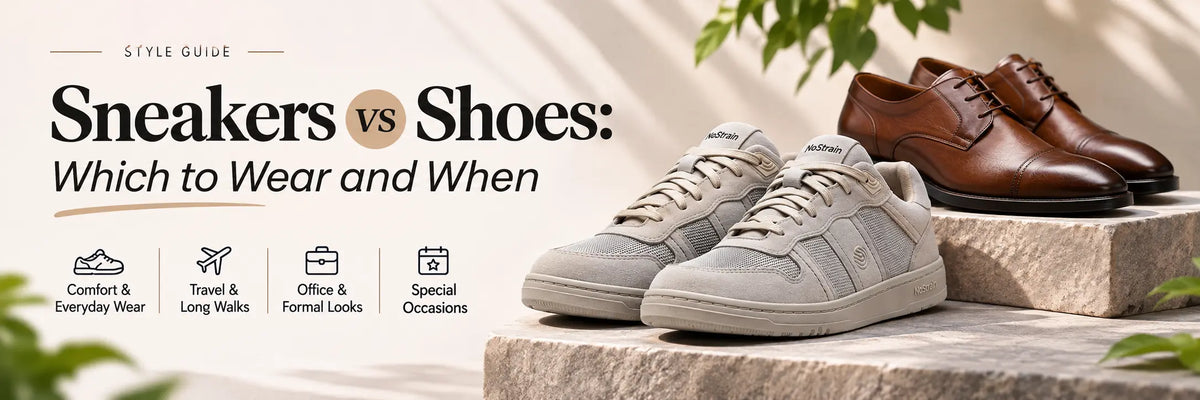
Sneakers vs Shoes: Which to Wear for Office, Weddings and Everyday in India
Sneakers are shoes with a flexible rubber sole and a cushioned insole, made for walking all day. "Shoes" in Indian usage usually means formal shoes such as Oxfords, Derbys and loafers. Pick sneakers for comfort and daily movement, and formal shoes when a dress code or ceremony asks for them. Low-top leather sneakers for men now sit between the two.
Key takeaway: sneakers win on comfort, formal shoes win on formality, and a clean leather sneaker covers most office days in between.
Last updated: 4 November 2026
Sneakers vs shoes at a glance
| Sneakers | Formal shoes | |
|---|---|---|
| Sole | Flexible rubber or TPR, often with a tread | Stiffer sole, often leather or hard rubber |
| Insole | Cushioned footbed | Thinner, firmer insole |
| Upper | Leather, suede, mesh or canvas | Polished leather |
| Closure | Laces or slip-on | Laces, buckles or slip-on |
| Best for | Commute, college, travel, casual offices | Interviews, client meetings, formal ceremonies |
| Care | Brush or wipe, no polish on suede | Regular polish and shoe trees |
What is the difference between sneakers and shoes?
All sneakers are shoes, but not all shoes are sneakers. A sneaker is built around comfort: a soft, flexible sole, a cushioned insole and a lighter upper. Formal shoes are built around a sharp silhouette, with a stiffer sole and polished leather. The difference shows most after eight hours on your feet.
The words get mixed up in India. Shops sell "sneaker shoes", "casual shoes" and "sports shoes" as if they were one thing. Here is how they split:
- Sports shoes are built for running, gym or court play.
- Lifestyle sneakers are made for walking, standing and daily wear, and are not meant for training.
- Formal shoes are dress shoes for office dress codes, interviews and ceremonies.
Are sneakers more comfortable than formal shoes?
For most people, yes. A sneaker's cushioned insole and flexible sole absorb the impact of walking, while a formal shoe's firmer sole passes more of it to your feet. On days with a metro commute, site visits or long standing hours, sneakers leave your feet less tired by evening.
Comfort comes from build details you can check before you buy. Our SLANT suede sneakers, for example, pair an Ortholite cushioned insole with a rubberised TPR sole that is both stitched and glue-bonded, and tested for 1,00,000 flex cycles. Many formal shoe listings skip these details, so compare what each product page actually tells you.
Can you wear sneakers to the office in India?
In most modern Indian offices, yes, if the sneakers are leather, low-top, plain and clean. Tech, startup, media and design workplaces accept them every day. Banks, law firms and client-facing roles with a strict dress code still expect formal shoes, so check your office norm first and keep a formal pair for meetings.
Office-ready sneakers follow a few simple rules:
- Choose smooth or grained leather over mesh or canvas.
- Stick to black, white, grey or tonal colourways with small branding.
- Keep the sole slim, avoiding chunky or high-top shapes.
- Keep them clean, because scuffed sneakers look careless with trousers.
The ALBA leather tennis sneakers in matte black and white are a good example of a pair that works for casual Fridays and smart-casual offices.
Do sneakers look good with formal trousers?
They do when the trouser and the sneaker match in shape. Slim or tapered trousers that end just above the shoe look neat. Wide trousers that pile up over a low sneaker look untidy. Pair dark trousers with black or grey sneakers, and light chinos with white or beige pairs.
For a formal-looking office pair, the NOIR black leather sneakers use smooth-grain and printed-grain leather with tonal branding, so they read as dark leather shoes from a distance.
When should you choose formal shoes over sneakers?
Choose formal shoes for job interviews, board or client meetings, court appearances, formal dinners and the main wedding ceremony. These are moments where the people around you judge the outfit as a whole, and a dress shoe is the safe, expected choice. Sneakers fit everything around those moments.
A quick way to decide:
- Formal shoes: interviews, pitches, formal events, conservative offices
- Leather sneakers: regular office days, travel for work, dinners out
- Suede or mesh sneakers: college, weekends, errands, travel
If you are still choosing your first pair, our guide on how to choose sneakers covers size, sole and material.
Browse How to style sneakers for men Guide
Can you wear sneakers to an Indian wedding?
You can for the lighter functions. White or tonal sneakers work with a kurta for haldi, mehendi and sangeet, where people dance and move around for hours. For the main ceremony and reception, most families still expect ethnic footwear like juttis and mojaris, or polished formal shoes with a suit.
For outfit-by-outfit ideas across festivals and functions, see our festive footwear guide.
How do sneakers and formal shoes handle Indian weather?
Neither likes heavy rain. Suede sneakers should stay home on wet days, and leather of both kinds needs drying in shade after it gets wet. In dry heat, sneakers with mesh panels or a mesh lining breathe better than closed formal shoes, which tend to trap heat on long summer days.
Formal shoes need regular polish and shoe trees. Sneakers need a quick brush or wipe after dusty days. Neither should go in a washing machine or be dried in direct sun.
Sneakers vs shoes: which should you buy first?
If you own one pair of formal shoes already, buy a leather sneaker next. It covers most office days, travel and evenings, so it gets worn far more often. If your workplace demands formal shoes every day, buy a good formal pair first and add a casual sneaker for weekends.
A practical starter set for most men:
- One pair of black formal shoes for interviews and ceremonies
- One pair of plain leather sneakers for office and travel
- One casual pair for weekends and hot days
For hot days when even sneakers feel heavy, our men's slip-on espadrilles are a lighter option for casual outings.
Frequently asked questions
Are sneakers considered formal shoes?
No. Sneakers are casual footwear. Plain leather sneakers in black, white or grey count as smart-casual and work in many offices, but they do not replace formal shoes for interviews or ceremonies.
Can I wear sneakers with a suit?
Yes, for relaxed events, if the sneakers are clean, low-top and leather in white, black or grey. Keep the suit slim and the trousers slightly cropped. Avoid it for business meetings or formal weddings.
Should I wear socks with sneakers and formal trousers?
Wear no-show socks with cropped trousers so the ankle stays clean. With full-length trousers, plain socks in the trouser colour look neat. Avoid white sports socks with formal trousers.
Are sports shoes and sneakers the same?
Not quite. Sports shoes are made for running, gym or court play. Lifestyle sneakers are made for walking and daily wear, so they look smarter but are not meant for training.
Can sneakers be worn daily?
Yes. Lifestyle sneakers are made for daily walking and standing. If you wear them every day, rotate two pairs so each one dries out fully between wears, and brush or wipe them every few days.
Leave a comment
This site is protected by hCaptcha and the hCaptcha Privacy Policy and Terms of Service apply.