

How to buy lace-up shoes for men? A Complete Guide for Men
Most lace-up shoes-buying guides tell you to "check the fit" and "pick a good brand" without saying what that actually means in practice. This one is specific: what to measure, what to look at on the sole, and what a real return policy should cover before you order.
Start with how you'll actually use them
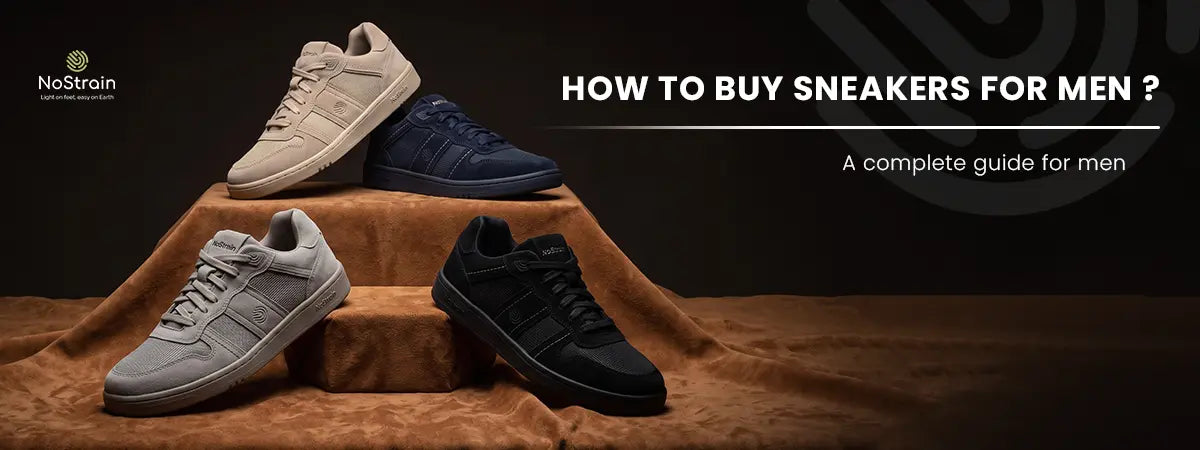
The biggest buying mistake is picking a sneaker built for the wrong job. A running shoe, a gym training shoe, and a daily-wear casual sneaker are built around different priorities: impact absorption for running, lateral stability for gym work, and all-day comfort with a smart-casual look for daily wear. If you're buying for the commute, the office, and weekend errands rather than sport, a casual sneaker with a cushioned insole and a clean, low-top build is the right category, not a performance shoe. SLANT in Navy Blue is a straightforward example of what this daily-wear category actually looks like: low-top, lace-up, and built for the commute rather than sport.
Get the size right before anything else
Fit matters more than any other single factor, and it's also the easiest thing to get wrong when buying online. Toes need room, the heel shouldn't slip, and a size that feels fine standing still can still feel wrong after two hours of walking.
The reliable way to size online is by foot length in centimetres, not by the UK or US number you usually buy, since sizing shifts slightly between brands. Stand on paper in the evening, when feet are at their largest for the day, trace the outline, and measure the longest straight-line distance from heel to toe. Measure both feet and use the larger one. NoStrain's men's sneaker size chart has the exact UK/US/EU breakdown by foot length; if your measurement falls between two rows on any chart, size up rather than down.
If you already wear a specific sock thickness daily, try the sneaker with that sock before deciding on fit. Thin socks leave more room than thick ones, and the difference is enough to change how a borderline size feels.
Check the sole and insole, not just the upper
The upper decides how a sneaker looks and breathes. The sole and insole decide how long it lasts and how it feels after eight hours on your feet, and this is the part most buying guides skip.
Look at how the sole is joined to the upper. A glued-only join is the cheaper, more common construction, and it's more prone to separating at the edge over months of wear, particularly in humid conditions. A sole that's stitched in addition to being glue-bonded holds up better, and you can actually check this yourself by looking at the edge of the sole for visible stitching, not just relying on a brand's claim.
A named cushioning material is worth more than a vague "comfortable insole" claim. Ortholite, for example, is a widely used, third-party foam known for resisting the compression-flattening that cheaper foam develops within a few months. NoStrain's sneakers use an Ortholite insole and a dual stitched-and-glued sole for exactly this reason, and every pair goes through 1,00,000 flex-cycle testing before it ships, along with separate checks on leather quality and stitching strength. The full breakdown of this construction is in the complete SLANT buyer's guide.
Match the upper material to how you'll wear them
- Suede. Holds its shape well over time and reads as more considered for office or smart-casual wear than mesh. Needs care around water, so it's better as a dry-weather daily pair than an all-season one. SLANT in Beige is a suede example built specifically for this kind of dry-weather daily wear.
- Smooth leather. More water-resistant and easier to wipe clean, but doesn't breathe as well and usually needs a longer break-in period.
- Canvas or mesh. Breathes best and dries fastest, which makes it a better choice for consistently hot or wet conditions, though it shows wear faster than suede or leather.
Check stitching quality regardless of material. Loose threads or uneven seams on a new pair are a sign of the same weak construction that will show up as a problem later.
Set a real budget, not just a price ceiling
Price reflects build quality and brand costs, but it doesn't automatically reflect comfort. Set a number you're comfortable with and compare specific construction details (sole join, insole material, upper material) across options in that range rather than assuming the more expensive pair is automatically better. Mid-range sneakers with verifiable construction details, rather than the cheapest or the most expensive option by default, usually give the best value for daily wear.
Confirm the return policy before you order a size you can't try on
Online sizing is a guess until the shoe arrives, so the return or exchange window matters as much as the shoe itself. Look for a clear window (a week is standard), confirmation that it covers genuine fit issues and not just defects, and a straightforward process: you send it back, then the exchange is processed once it's received. Vague policies or ones buried in fine print are a signal to buy elsewhere.
A quick checklist before you buy
| Check | Why it matters |
|---|---|
| Foot length in cm, matched to the brand's size chart | Avoids the most common online sizing mistake |
| Sole construction (stitched, glued, or both) | Determines how long the sole holds up |
| Named insole material | A checkable claim beats a vague "comfortable" one |
| Upper material matched to your climate and use | Suede for smart-casual dry wear, canvas or mesh for heat and humidity |
| Return or exchange window and process | Protects you if the size or fit is wrong |
| Total price after prepaid or bulk discounts | The listed price isn't always the final one |
Caring for sneakers after you buy
Clean mesh or canvas with a soft brush; wipe leather with a slightly damp cloth. Air dry away from direct heat, never with a dryer or in direct sun, since heat can warp soles and stiffen or crack leather and suede. A shoe tree or lightly stuffed paper keeps the shape intact in storage. If you wear sneakers daily, rotating between two pairs gives each one a full day to recover its shape rather than staying under constant compression.
Both current SLANT colourways are suede, low-top, and lace-up, made in India, with free shipping and an easy 7-day return or exchange window.
FAQ
What's the most common mistake when buying lace-up shoes online? Ordering by a remembered UK or US size instead of measuring actual foot length in centimetres. Sizing shifts slightly between brands, so the same number doesn't always fit the same way.
Does a more expensive sneaker always mean better quality? Not automatically. Price reflects brand and build costs, but checkable details like sole construction and insole material tell you more about actual quality than price alone.
How can I tell if a sneaker's sole will last? Look at how it's joined to the upper. A sole that's stitched in addition to being glue-bonded generally outlasts a glued-only join, especially in humid conditions, and you can check this by looking at the sole edge before buying.
Should I buy sneakers for daily wear the same way I'd buy running shoes? No. Running shoes prioritise impact absorption for mileage; daily-wear sneakers prioritise all-day comfort and a smart-casual look. Buying the wrong category for your actual use is a common mistake.
What should a good return policy cover? A clear window, at least a week, that covers genuine fit issues rather than only manufacturing defects, with a simple process: you send the pair back, and the exchange or refund is processed once it's received.
Browse NoStrain's full sneakers for men collection to see current styles and pricing.
Leave a comment
This site is protected by hCaptcha and the hCaptcha Privacy Policy and Terms of Service apply.