

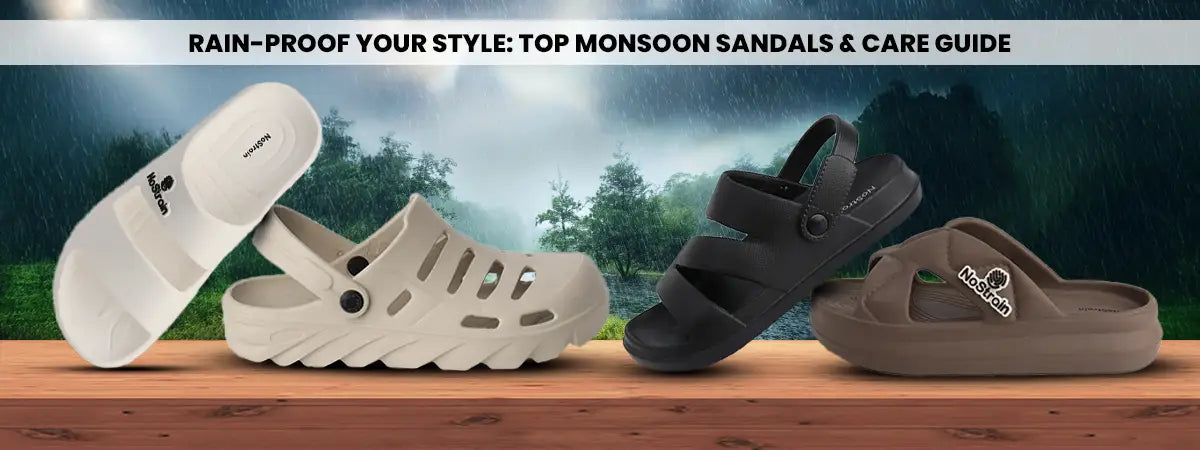
Rain-Proof Your Style: The Complete Monsoon Sandals & Foot Care Guide (2026)
The best monsoon sandals are made from EVA, rubber, PU or PVC — never leather or canvas — with deep-tread anti-slip soles and quick-dry footbeds. These materials shed water instead of absorbing it, dry within minutes, and give you grip on wet tiles, flooded roads and muddy footpaths. Below, we break down what to look for, which styles work for men and women, and how to stop monsoon from ruining your feet (not just your footwear).
Monsoon in India isn't gentle. One minute you're stepping out for chai, the next you're wading through ankle-deep water outside a metro station. Your umbrella can handle the sky. Your footwear has to handle the ground — and that's the part most people get wrong.
Every year, the same thing happens: canvas shoes turn into sponges, leather sandals stiffen and crack once they dry, and foam soles turn footpaths into skating rinks. By the time August rolls around, half of India's shoe racks are one uncomfortable, slightly-smelly mess. This guide exists to stop that from happening to you.
We'll cover what actually makes a sandal monsoon-ready, the best options for men and women, an often-ignored foot health angle, and exactly how to care for your pair so it survives the season and the next one too.
🛍️ In a hurry? Shop the monsoon edit now: Waterproof Sandals for Men · Waterproof Sandals for Women — 100% EVA, anti-skid, quick-dry. Buy 2 pairs: 5% off, Buy 3: 5% + extra 5% off.
Why Your Regular Footwear Fails the Minute It Rains
Most footwear is built for dry weather, and it shows the moment the clouds open up.
- Leather soaks up water like a sponge. It stretches while wet, then hardens and cracks as it dries — which is why last year's leather sandals suddenly feel stiff or start smelling musty.
- Canvas holds moisture for hours. Even after the rain stops, a canvas shoe can stay damp long enough to become a breeding ground for bacteria.
- Standard foam soles aren't designed with deep treads, so they lose grip the moment they hit a wet tile or painted surface — a common cause of monsoon slips.
None of this is really about "ruined shoes." It's about wet feet staying wet for hours at a stretch, which is where the real problem starts.
The Real Reason Monsoon Ruins Feet, Not Just Footwear
Here's the angle most footwear guides skip: monsoon isn't just hard on your shoes, it's hard on your skin. Warm, damp conditions are exactly what fungus needs to thrive, and closed or waterlogged footwear traps that moisture against your skin for hours. That's why itching between the toes, peeling skin, and a smell that doesn't go away even after washing are so common between June and September.
The fix isn't just a better sandal — it's a routine:
- Choose open, breathable designs over closed shoes whenever you're only dealing with light rain or short outdoor stretches. Air circulation matters as much as water resistance.
- Dry your feet properly the moment you're indoors, especially between the toes, before you put on dry socks or slippers.
- Don't reuse a wet pair the next day. Rotating between two pairs of monsoon sliders or sandals gives each one a full day to dry out completely, which cuts down on the odour and fungal risk that comes from constantly damp footbeds.
- Avoid sharing footwear during monsoon — it's one of the more overlooked ways foot infections spread within a household.
If you're already noticing persistent itching, redness, or a smell that doesn't improve with washing, that's worth a quick check with a doctor rather than home remedies alone. For everyday prevention, though, the right sandal does most of the work.
What Actually Makes a Sandal "Monsoon-Proof"?
Not every sandal labelled "waterproof" earns it. Here's what to actually check before you buy.
| Feature | What to look for | Why it matters |
|---|---|---|
| Material | EVA, rubber, PU or PVC | These don't absorb water and dry almost instantly, unlike leather or canvas |
| Sole grip | Deep treads or ridges | Prevents slipping on wet tiles, marble floors and muddy roads |
| Cleaning | Wipe-clean, non-fabric uppers | Mud and sand rinse off in seconds instead of staining |
| Drainage | Mesh channels or footbed holes | Lets water escape instead of pooling under your foot |
| Straps | Adjustable, water-resistant | Keeps fit secure even after the material gets wet |
A quick material cheat sheet: EVA is the lightest and dries the fastest, making it ideal for daily commutes. Rubber offers the best grip on slick surfaces, which matters if you're walking on tiled steps or painted footpaths. PU sits in between — sturdy, water-resistant, and slightly more structured for all-day wear. Leather, however well-crafted, simply isn't built for standing water, no matter how premium it looks.
Best Monsoon Sandals for Men
Sneakers and everyday slides tend to be the default, but in monsoon, the wrong choice means wet socks by 10 a.m.
Open-Toe Waterproof Sandals — Best for people who are in and out of rain all day. The open design lets feet breathe and dry between showers, and adjustable straps mean the fit stays secure even once wet. NoStrain's waterproof sandals for men are built specifically around this — 100% EVA, anti-skid soles, and a footbed that doesn't stay soggy.
Slip-On Rain Sliders — The easiest daily-wear option. Grooved rubber soles dry fast and clean up with a quick rinse, which makes them ideal for anyone commuting by two-wheeler or walking through waterlogged lanes to catch a metro or bus. Browse sliders for men for lightweight, all-day options.
Monsoon-Ready Clogs — If you want something a step more secure than an open slider — useful for auto-rickshaw commutes or standing outside for longer stretches — closed-front clogs for men offer more coverage while still draining and drying quickly.
A note for daily commuters
If you're riding a two-wheeler through monsoon traffic, prioritise grip over everything else — wet gear shifters and footpegs punish slippery soles fast. If you're mostly walking to a metro or bus stop, prioritise quick-dry over grip, since you'll likely be indoors (and dry) for most of the day.
👞 Shop Men's Monsoon Picks: Waterproof Sandals · Sliders · Clogs
Best Monsoon Sandals for Women
Waterproof doesn't have to mean compromising on style.
Buckled Rubber Sandals — Sturdy, fully washable, and secure enough to stay in place through puddles and crowded commutes. Darker tones like black or beige hide monsoon splashes better than lighter shades.
Platform Rainy Sandals — Raising your foot even slightly off the ground keeps it further from puddles and splashback, without sacrificing an everyday, put-together look.
Waterproof-Lined Sandals — A good middle ground between height, comfort and function for anyone who wants something they can wear from a rainy commute straight into the office. NoStrain's waterproof sandals for women collection covers all three styles — non-slip, breathable, and quick-dry by design.
If your day is more indoor-outdoor — home to office to home — pair a waterproof pair for the commute with a comfortable pair of sliders for women to change into once you're at your desk. It keeps damp footwear off your feet for the rest of the day, which matters more than people realise.
👡 Shop Women's Monsoon Picks: Waterproof Sandals · Sliders · Cork Sandals
"Rain Sandals" vs "Waterproof Slippers" — Is There Really a Difference?
Short answer: not much, but the small differences are worth knowing.
- Rain sandals / rainy sandals usually refer to open-toe, strap-style footwear built from water-resistant material — good for short exposure to rain and quick errands.
- Waterproof slippers typically have a more enclosed footbed and are meant for longer stretches outdoors or standing water.
- Monsoon sliders are the most casual, slip-on option — best for daily indoor-outdoor movement rather than long commutes.
If you only buy one pair this season, an open-toe waterproof sandal covers the most ground. If your commute involves genuinely flooded streets, a slightly more enclosed waterproof slipper is worth the extra coverage.
Lightweight Sandals That Dry Fast and Don't Smell: What to Actually Check
This is the question we get asked the most, so here's the direct answer.
A sandal that dries fast and stays odour-free comes down to three things:
- Open-cell EVA or breathable footbeds — closed-cell foam holds moisture inside; open designs let air move through and push moisture out.
- No fabric lining — cloth linings absorb sweat and rainwater and hold onto smell long after the sandal looks dry.
- A rotation habit — even the best sandal will start to smell if it's worn wet, two days in a row, without a full 24-hour dry-out. Owning two pairs and alternating them solves this more reliably than any single "miracle" material.
If odour has been a recurring problem in past monsoons, it's worth checking whether the smell is coming from the sandal or from feet that haven't fully dried before the shoe goes back on — the fix is different depending on which it is.
How to Care for Your Rainy Sandals
A good pair lasts multiple monsoons if you treat it right.
- Clean after every use. Mud left overnight is far harder to remove than mud rinsed off immediately. Mild soap and water is enough.
- Air dry in shade, never direct sun. Direct heat weakens EVA and rubber over time and can cause cracking.
- Store in a dry spot. Silica gel packets or paper stuffing inside a shoe rack cut down on trapped humidity.
- Rotate pairs. Give each sandal a full day off to dry out completely — this alone prevents most of the smell and material breakdown people blame on "cheap quality."
- Check straps and soles monthly. Catching a loose buckle or worn tread early means you fix it, not replace the whole pair.
Styling Monsoon Sandals Without Giving Up on Fashion
Rain is not a reason to dress down.
For Men
- Cargo shorts with slip-resistant sliders
- Joggers with cork-based rubber sandals
- Denims with open-toe waterproof sandals
For Women
- Leggings with platform rainy sandals
- Palazzos with cork sandals
- Dresses with buckled waterproof sandals
Frequently Asked Questions
Are rubber sandals good for monsoon? Yes — rubber offers the best wet-surface grip of any common sandal material, along with fast drying and easy cleaning, which makes it one of the safer choices for flooded or slippery streets.
Can I wear leather sandals in the rain? It's best avoided. Leather absorbs water, stretches while wet, and tends to stiffen or crack once it dries, which shortens its life significantly compared to EVA or rubber.
How do I stop my sandals from smelling during monsoon? Let them dry completely between wears, avoid fabric-lined designs, and clean them after exposure to mud or standing water. Owning a second pair to rotate is the single most effective fix.
What is the best footwear material for monsoon in India? EVA and rubber are the top choices — both resist water, dry quickly, and hold up against repeated exposure to rain, unlike leather or canvas.
Are open sandals better than closed shoes in the rain? For most day-to-day use, yes. Open designs let feet breathe and dry between showers, which lowers the risk of fungal infections that come from prolonged moisture trapped in closed shoes.
Final Word
Monsoon shouldn't mean choosing between staying dry and looking put-together. The right sandal — built from the right material, with real grip and real drainage — solves both problems at once.
🌧️ Ready to rain-proof your feet? Shop the Full Monsoon Collection →
Explore NoStrain's full waterproof sandals for men and waterproof sandals for women collections, or browse sliders and clogs if you want something for the in-between days.
Related reads: The Ultimate Sandals & Sliders Style Guide for Every Occasion · Best Sliders for Men Daily Use · This Summer Choose Best Sandals for Women · Best Tips for Finding Comfortable & Durable Slippers
Leave a comment
This site is protected by hCaptcha and the hCaptcha Privacy Policy and Terms of Service apply.