
,%20and%20the%20tread%20has%20a%20real%20grip%20pattern%20rather%20than%20a%20smooth%20surface.%20Rubber%20...)
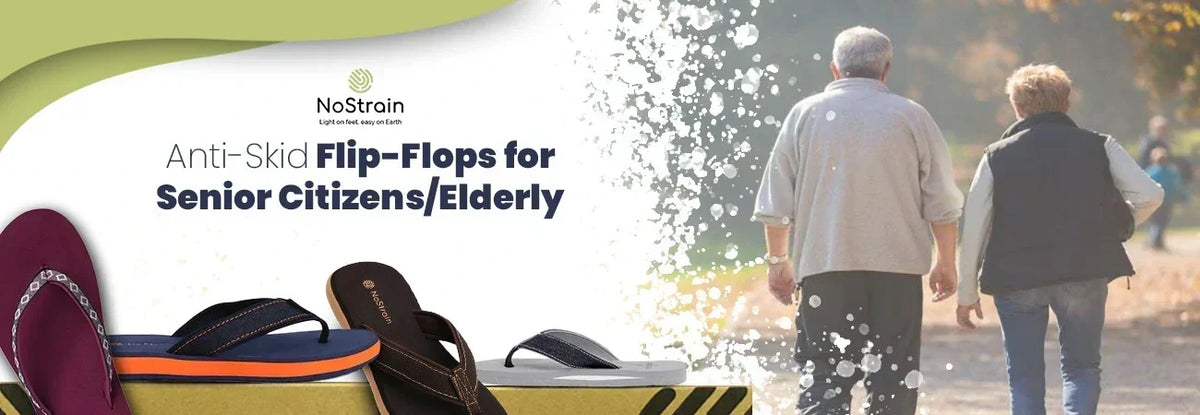
Anti-skid flip-flops for senior citizens: what actually prevents slipping
Flip-flops can be safe for elderly use, but only if two things are true: the sole is natural rubber (not EVA or PU foam), and the tread has a real grip pattern rather than a smooth surface. Rubber is hydrophobic, so it doesn't hold a thin film of water the way foam does, and that film is what causes most bathroom slips in the first place. A flat, fastener-free flip-flop in the wrong material is genuinely risky for seniors; the same shape in natural rubber with a treaded sole is a different product functionally, even though it looks similar.
Why flip-flops worry doctors in the first place
The concern isn't flip-flops as a category, it's the two things that usually come with them: no strap or fastener holding the foot in place, and soles made from cheap synthetic foam that gets slick the moment it's wet. Add a wet bathroom floor and a senior with reduced balance or grip strength, and the combination gets dangerous fast.
Falls are already one of the leading causes of injury in older adults. The CDC's own figures put it at roughly 1 in 4 adults over 65 falling each year, with about 1 in 5 of those falls causing a serious injury such as a fracture or head injury. Where exactly those falls happen is less settled than most articles suggest - the bathroom is often cited as the top location, but a peer-reviewed review of emergency department data actually found the bedroom (25%) and stairs (23%) slightly ahead of the bathroom (22.7%). The bathroom isn't uniquely dangerous so much as it combines wet floors with a hard, unforgiving surface to land on.
What makes a flip-flop actually anti-skid
Two things, and neither is marketing language:
Material. Natural rubber is latex tapped mainly from Hevea brasiliensis trees, and it's hydrophobic by nature — water beads and runs off instead of sitting on the surface. EVA and PU, the foams used in most budget flip-flops, don't share that property, which is why they feel fine dry and turn slick within seconds of getting wet.
Tread. A flat sole, rubber or not, still glides on a wet tile floor. Shallow grooves or a raised tread pattern break up that water film and give the sole something to bite into. Smooth-soled "rubber" flip-flops exist and don't solve the problem on their own — material and tread both have to be right.
Natural rubber vs. EVA and PU: the practical difference
| Natural rubber | EVA / PU foam | |
|---|---|---|
| Grip when wet | Stays tacky, sheds water | Turns slick |
| Weight | Slightly heavier | Very light |
| Durability | Wears slowly, ages well | Compresses and softens over months |
| Cost | Higher | Lower |
| Biodegradable | Yes | No |
None of this means EVA flip-flops are unsafe for everyone — a younger adult with good balance on a dry floor has little to worry about. The calculation changes specifically for someone with reduced mobility, reduced grip strength, or a history of falls.
What to check before buying a pair for an elderly parent
- Tread depth — run a finger across the sole. If you can't feel a pattern, it won't do much on wet tile.
- Fit — a flip-flop that's slightly loose lets the foot slide forward with every step, which causes stumbles independent of sole grip.
- Width — older feet often widen or swell; a snug-fitting design cuts down on the sideways shift that leads to rolled ankles.
- Weight — heavier soles are usually more durable but can be tiring for someone with limited leg strength; this is a genuine trade-off, not a solved problem.
Anti skid slippers for the bathroom
Most Indian bathrooms have glazed or polished tile, and soap film and shampoo residue make that surface slicker than plain water does. A bathroom slipper needs a rubber or fully waterproof sole, a tread that lets water escape, and a snug fit so the foot doesn’t slide inside it.
Two habits matter more than people expect. Scrub the sole with a brush once a week, because soap scum fills the grooves and a treaded sole starts behaving like a smooth one. And keep one pair for the bathroom only, since a pair worn on the street brings dirt in with it.
You can test grip at home. Wet the floor and the sole, press your thumb on the tread and drag it. If it glides with no resistance, the slipper will do the same under a heel.
Replace the pair when the tread has worn smooth, which usually shows up at the heel and ball of the foot first, or when the sole cracks. Run a finger across the underside. If you can’t feel a pattern, it has stopped doing its job.
Browse our anti skid slippers and check the underside for tread using the finger test below before you order.
Home slippers for elderly: marble, vitrified tile and stairs
Marble and vitrified tile are common in Indian homes, and a little dust or a damp patch is enough to make them slick. Home slippers for an elderly person should be snug, light, and have a thin, firm sole with a textured underside. The CDC’s fact sheet on feet and footwear for older adults lists a textured sole and a thin, firm midsole among the features of a safe shoe, because a very soft sole makes it harder to feel the floor.
Thick, fluffy house slippers are comfortable and are exactly the type to avoid. They are soft, they slide, and the sole is often smooth. Loose slippers should come off before stairs.
Waterproof slippers for women: what to check
Waterproof and anti-skid are different claims. Waterproof describes the material, so a smooth waterproof slipper can still slide on wet tile. For kitchen, wash area and bathroom use, look for a sole that doesn’t absorb water, a visible tread, and a strap across the top of the foot rather than a thong, since a strap holds better when the foot is wet. Our waterproof slippers for women are built around these points.
Where flip-flops still fall short
Doctors generally recommend fastened footwear — something with a back strap or velcro closure — for seniors who've already had a fall or have significant balance issues. A flip-flop, however good the sole, still has an open back and relies on the toes gripping to stay on, which fastened shoes don't require. For low-risk daily wear around the house, a good anti-skid flip-flop is a reasonable choice. For someone with a recent fall history, it's worth asking a doctor or physiotherapist before switching from fastened footwear.
What CDC and ACP guidance says about slippers for older adults
The CDC’s STEADI footwear fact sheet lists a textured sole, a firm heel collar, a thin firm midsole, and laces or straps that hold the shoe on the foot as features of a safe shoe. It also names slippery or worn soles as a fall risk. A 2025 review of footwear for older adults, summarised by the American College of Physicians, advises avoiding slippers unless they are enclosed, have firm soles and fasten securely.
Read against that guidance, the common footwear types for older adults compare like this:
| Footwear type | How it stays on the foot | Where it fits |
|---|---|---|
| Open-back flip-flop | Toes grip the thong | Steady walkers, dry floors, short use |
| Strapped slipper (strap over the foot) | Strap holds the forefoot, heel stays open | Home use and bathroom trips for steady walkers |
| Closed-back slipper with firm sole | Enclosed heel and sole shape | Longer wear indoors |
| Shoe with laces or velcro | Fastened at the foot | Anyone with a recent fall, neuropathy, a bunion or balance problems |
The table is a reading of the guidance above, not a product rating. Anyone in the last row should check with a doctor or physiotherapist before moving to slippers.
FAQ - Anti-skid flip-flops
Are flip-flops safe for elderly people at all, or should they be avoided completely? They're safe for low-risk daily wear if the sole is natural rubber with real tread and the fit is snug. They're not a substitute for fastened footwear if a doctor has specifically recommended one after a fall or balance issue.
What's actually different between a regular flip-flop and an "anti-skid" one? Mainly the sole material and tread depth. A lot of flip-flops marketed as anti-skid are still EVA foam with a slightly textured surface — that helps a little on dry floors but does much less once the surface is wet, compared to natural rubber.
Do rubber soles wear out faster than foam ones? The opposite, generally — rubber compresses and cracks more slowly than EVA foam, which tends to flatten and lose cushioning within months of regular wear.
Can seniors wear flip-flops outside the house, not just at home? Yes, on dry, even ground. Wet or uneven outdoor surfaces are where the fastener question matters more, since an open-back flip-flop has less to keep the foot secure if the ground is unpredictable.
Which slippers are best for old people to avoid slipping in the bathroom?
A natural rubber sole with a tread you can feel, a snug fit, and ideally a strap across the top of the foot. Skip foam soles, which turn slick when wet.
Are waterproof slippers automatically anti-skid?
No. Waterproof means the material doesn’t absorb water. Grip comes from the rubber and the tread, so a smooth waterproof slipper still slides on wet tile.
How do I know when anti skid slippers need replacing?
When the tread has worn smooth, usually at the heel and ball of the foot first, or when the sole cracks. If you can’t feel a pattern with a finger, replace them.
Can an elderly person wear bathroom slippers around the house?
For short, low-risk use, yes, if the sole is clean and the tread isn’t worn flat. For long wear at home, a snug slipper with a thin firm sole is the better pick.
What size should I buy for an elderly parent?
Try on in the evening, when feet are most swollen. The heel shouldn’t lift while walking and the foot shouldn’t slide forward on each step.
For wet areas, the waterproof slippers for women and waterproof sandals are the ones built for bathrooms and balconies. If you want a strap that holds the foot better than a thong, look at angular slippers for men and angular slippers for women. For flat feet or standing fatigue there are arch slippers, and the full home slippers range covers everyday indoor wear.
Leave a comment
This site is protected by hCaptcha and the hCaptcha Privacy Policy and Terms of Service apply.