
%0AEvery%20year%20the%20advice%20is%20the%20same%20%E2%80%94%20%22buy%20waterproof%20sandals%20before%20monsoon.%22%20But%202026%20isn't%20a%20normal%20year,%20and%20yo...)
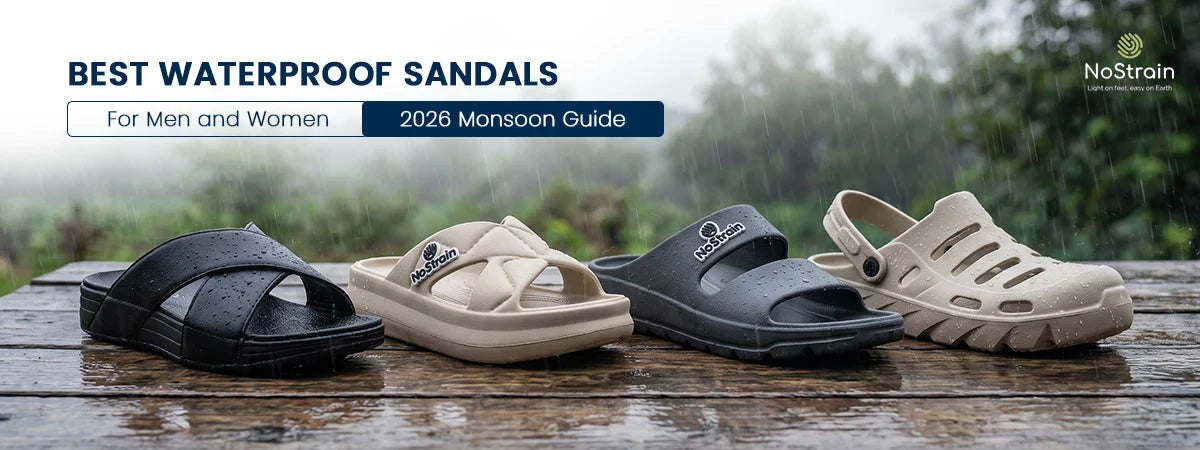
Best Waterproof Sandals for Men and Women in India - 2026 Monsoon Guide
Monsoon 2026: Why This Year Is Different (And Why That Changes What You Should Buy)
Every year the advice is the same — "buy waterproof sandals before monsoon." But 2026 isn't a normal year, and your footwear choice should reflect that.
The India Meteorological Department's first long-range forecast for the 2026 southwest monsoon (June–September) pegs seasonal rainfall at around 92% of the Long Period Average — placing it in the "below normal" category. Weak La Niña-like conditions in the Pacific are transitioning toward ENSO-neutral, with a real possibility of El Niño developing during the season, a pattern that historically skews India's monsoon distribution.
What does "below normal overall" actually mean for your feet? Not less rain everywhere — uneven rain everywhere. Early indications suggest the first half of the season (June–July) could stay closer to normal, while the second half (August–September) is where the real shortfall may show up. Northeastern and northwestern India — including Delhi-NCR, Punjab, and Haryana — along with parts of South Peninsular India, could see average to above-average rainfall even in an overall "weak" monsoon year, while the core rainfed belt across central and western India may see drier stretches punctuated by sudden, intense spells.
In practical terms, this means 2026 monsoon footwear needs to handle two extremes in the same season:
- Sudden, intense cloudburst-style rain in pockets — short, heavy, flooding-prone — even during a "below normal" season, because intensity and total volume aren't the same thing.
- Longer dry-humid stretches between rain spells, where sweaty, waterlogged sandals from the last downpour haven't fully dried and start smelling before the next one even hits.
A sandal that's only built for "constant heavy rain" struggles in this stop-start pattern. A sandal that's only built for "occasional drizzle" fails the moment a cloudburst hits. You need something that's genuinely waterproof on contact, dries fast in the gaps between rain, and grips equally well on dry pavement and flooded streets — because in 2026, you'll likely be walking on both within the same hour.
This is the lens we're using for every recommendation below.
The Real Monsoon Problem Nobody Talks About
Picture this: You step out on a rainy morning. Your bag is covered. Your umbrella is up. But your feet? Already soaked through your regular sandals before you reach the gate.
In India, we prepare for everything during monsoon — except our footwear. We buy raincoats, check drainage routes, carry extra socks. But we still wear sandals that soak up water like a sponge, develop a foul smell by noon, and turn into slip-and-fall hazards on wet tiles.
The solution isn't complicated. It's the right pair of waterproof sandals — and in a year with uneven, unpredictable rainfall, the "right pair" matters more than ever.
The Indian market is flooded (pun intended) with footwear that claims to be waterproof and fails by the second puddle. This guide cuts through the noise: what to look for, which features actually matter for the kind of monsoon 2026 is shaping up to be, and which NoStrain sandals are genuinely built for it.
Why Regular Sandals Fail in Monsoon
If you've ever searched for rainy sandals for men or sandals for rainy season and ended up disappointed with what you bought, you're not alone. Before buying, understand why most regular sandals fail during rains — especially in a year of sudden, short, intense spells:
Leather absorbs water and takes 24–48 hours to fully dry. With shorter, more frequent rain bursts expected this year, leather sandals never get a chance to dry between wettings. Repeated wetting causes cracking, peeling, and permanent damage within one season.
Foam midsoles get waterlogged. Once water enters the midsole, cushioning collapses. The sandal feels heavier, offers less support, and starts smelling bad within days — a bigger problem when humid gaps between rain spells give bacteria more time to grow.
Smooth outsoles become death traps. Flat soles with no grip pattern have zero traction on wet marble, wet cement, or rain-slicked roads. A sudden cloudburst can turn a dry pavement into a skating rink in minutes — exactly the scenario this year's forecast suggests we should expect more of.
Fabric straps rot. Canvas and textile straps absorb water, breed bacteria, and lose their grip on the foot — making the sandal slide around exactly when you need it to stay put.
What you actually need is footwear designed from the ground up for wet conditions that show up unpredictably. Let's break that down.
What Makes a Sandal Truly Waterproof
Genuine waterproof sandals share a few non-negotiable features:
1. Material: EVA, Rubber, or Treated PU — Not Leather or Fabric
EVA (Ethylene Vinyl Acetate) is the gold standard. It's lightweight, doesn't absorb water, dries in minutes, and has natural cushioning. Most NoStrain waterproof sandals and slippers use high-density EVA, which is why they feel soft underfoot even after a full day — and why they're ready to go again within minutes of a sudden downpour.
Natural rubber adds grip and durability. It's heavier than EVA but provides excellent traction on wet surfaces. Look for rubber outsoles on any sandal you plan to wear in heavy rain.
Treated PU (Polyurethane) can be water-resistant but varies widely by brand. If you're buying PU sandals for the rain, check that the brand specifically calls out water resistance — don't assume.
Avoid: Leather (even "waterproof leather"), mesh, fabric, or jute in wet conditions.
2. Outsole Design: Grooved, Multi-Directional Tread
A waterproof upper means nothing if the bottom slides. The outsole needs:
- Deep grooves that channel water away from underfoot
- Multi-directional patterns that grip in all movement angles
- Heel grip zones for stability on inclines and stairs
NoStrain's waterproof sandals for men — like the Parallel Waterproof Sandals and ZigZag Waterproof Sandals (covered in detail below) — are built with tested anti-skid outsoles that perform on the kind of surfaces Indian commuters encounter daily: wet bus stop floors, monsoon-slicked roads, rain-washed parking lots, and the sudden puddle that forms out of nowhere during a 20-minute cloudburst.
3. Strap Design: Secure Without Cutting
Wet feet + loose straps = sandal flying off mid-stride. Good rainy season sandals have:
- Adjustable or snug-fit cross-strap designs
- Raised toe post areas that keep the sandal anchored
- No narrow single straps that dig into wet skin
The cross-strap design on NoStrain's Women's Waterproof Cross Strap Slippers (covered in detail below) specifically addresses this — the EVA cross-strap doesn't cut, doesn't loosen when wet, and holds the foot in place on uneven, suddenly-slick surfaces.
4. Quick-Dry Construction (Critical for This Year's Stop-Start Rain)
True waterproof sandals dry in 15–30 minutes after stepping out of rain. If your sandal stays wet for hours, water is trapped inside foam, straps, or footbed layers. That's a sign of poor construction — not waterproof design.
This matters more in a year where forecasts point to short, intense rain spells separated by humid dry stretches. A sandal that takes hours to dry will still be damp — and starting to smell — by the time the next downpour arrives.
5. Cushioning That Doesn't Compress Underwater
High-density EVA maintains its cushioning properties even when wet. Cheap foam loses 30–40% of its cushioning when waterlogged. Over a long monsoon day — especially one where you're moving between dry indoor spaces and sudden wet outdoor conditions — that difference matters enormously for joint comfort, particularly for people who commute on foot or stand for long hours.
Top Waterproof Sandals for Men: NoStrain Picks
Whether you're searching for monsoon sandals for men, rain sandals, or simply the best waterproof sandals for everyday commuting, these are the most searched and most clicked waterproof products from NoStrain's men's collection, based on Search Console data:
1. NoStrain Men's Parallel Waterproof Sandals (Black) — Most Popular
The Men's Parallel Waterproof Sandals in Black is NoStrain's top-performing waterproof product. It combines a full-EVA construction with a parallel strap design that distributes pressure evenly across the foot.
Best for: Daily commuting, office casuals, long walks in unpredictable rain Key features: Anti-skid outsole, quick-dry EVA, BIS-certified materials Available in: Black, Beige, Brown, White, Grey
The parallel strap creates a secure mid-foot lock that prevents slipping even when the foot is wet — a detail most budget waterproof sandals get completely wrong, and exactly the kind of grip you need when a dry pavement turns wet without warning.
2. NoStrain Men's ZigZag Waterproof Sandals (Black & Brown)
The ZigZag Waterproof Sandals for Men are built for rougher terrain — think markets, construction-adjacent roads, waterlogged streets. The ZigZag outsole pattern channels water more aggressively than the Parallel design, giving it an edge during sudden, intense rain bursts.
Best for: Outdoor walking, delivery riders, field workers, anyone covering ground in unpredictable weather Key features: Aggressive ZigZag tread, thick EVA midsole, full waterproof construction
Also available in Brown for a more versatile everyday look.
3. NoStrain Men's Waterproof Street Clogs
The Men's Waterproof Street Clogs in Black, Grey, Beige, and White cover the top of the foot, making them better suited for two-wheeler riders, anyone driving through flooded streets, or situations where splashback is a concern — a frequent scenario when sudden short cloudbursts catch commuters mid-ride.
Best for: Bike riders, outdoor workers, poolside and beach use Available in: Black, Grey, Beige, White
Also explore: NoStrain's full Waterproof Sandals collection for men →
Top Waterproof Slippers & Sandals for Women: NoStrain Picks
The women's waterproof range at NoStrain has seen strong growth — particularly searches for waterproof slippers for women, waterproof sandals for women, and stylish waterproof sandals for women that don't compromise on grip or comfort during the rains.
1. Women's Waterproof Cross Strap Slippers (MS-16, MS-15, MS-17)
The cross-strap EVA slippers are NoStrain's flagship women's waterproof product. Available in Beige, Black, Brown, and Sage Green, they combine everyday style with full monsoon functionality.
- Beige (MS-16): 4.8-star rated, most popular color, pairs with both Indian and Western wear
- Black (MS-15): 4.9-star rated, most versatile for daily wear
- Brown (MS-17): 5.0-star rated, earthy and elegant
The cross-strap sits securely on wet feet. The EVA sole offers grip on wet tiles — bathroom floors, market corridors, post-rain streets. The footbed cushions all-day pressure without waterlogging, and dries fast enough to handle multiple rain spells in a single day.
2. Waterproof Wedge Heel Slippers for Women (MS-18, Black)
For women who want elevation without sacrificing wet-weather safety, the Waterproof Wedge Heel Slippers (MS-18) are a standout. The wedge sole is entirely EVA — no hidden leather lining, no foam that soaks — and the anti-skid outsole is designed specifically for the height differential that makes heeled sandals dangerous on suddenly wet surfaces.
Best for: Casual outings, short office days, college commutes
Also explore: Full Women's Waterproof Slippers collection →
Waterproof Sandals vs. Water-Resistant Sandals: What's the Difference?
This confusion costs buyers every monsoon season — and in a year with sudden intense rain spells, the gap matters more. If you've been searching for "water resistant sandals for men" thinking it's the same as waterproof, here's why that distinction could leave your feet soaked.
Water-resistant sandals can handle light splashes and brief exposure to moisture. They're not built for submersion in puddles or sustained rain. Many brands label regular rubber sandals as "water-resistant" when they mean "won't dissolve if they get wet."
Waterproof sandals are constructed so that no part of the sandal — upper, midsole, strap, footbed — absorbs water in prolonged wet conditions. They can handle puddles, heavy rain, and wet surfaces for extended periods without degrading performance.
Even in a "below normal" monsoon year, single-day rainfall in cities like Mumbai, Chennai, Kolkata, or Guwahati can exceed 100mm during a localized cloudburst. Forecast totals being lower for the season doesn't mean any individual day will be gentler — it often means the rain that does fall, falls harder and faster. You want genuinely waterproof construction, not just water resistance.
All NoStrain waterproof sandals are built for submersion and sustained rain exposure, not just splash protection.
Best Waterproof Sandals in India: How to Choose the Right One for 2026
Here's a quick decision framework, updated for this year's uneven rainfall pattern:
| Your Situation | Best Choice |
|---|---|
| Daily office commute, on-and-off rain | Men's Parallel Waterproof Sandals (Black/Brown) |
| Heavy outdoor walking, rough terrain, cloudburst-prone areas | Men's ZigZag Waterproof Sandals |
| Bike/scooter riding through flooded streets | Men's Waterproof Street Clogs |
| Women's daily use, flat and versatile | Cross Strap Slippers (Beige or Black) |
| Women's casual outing with some heel | Waterproof Wedge Heel Slippers (MS-18) |
| Beach, pool, vacation, or drier monsoon regions | Cross Strap EVA Slippers (any color) |
| Northeast / coastal South India (likely above-average rain in 2026) | ZigZag Sandals or Street Clogs for maximum grip and coverage |
| Delhi-NCR, Punjab, Haryana (above-average rain possible despite "below normal" national outlook) | Parallel Sandals for daily commute, Street Clogs for two-wheeler riders |
| Central/western India (likely drier stretches with occasional intense bursts) | Parallel Sandals or Cross Strap Slippers — quick-dry matters most here |
Price range: ₹799 to ₹1,499 — all BIS-certified, Made in India.
How to Care for Waterproof Sandals (Make Them Last 3+ Seasons)
Good waterproof sandals are an investment. These five habits extend their life significantly — and matter even more in a year of stop-start rain where sandals cycle between wet and dry more often:
Rinse immediately after rain walking. Don't let mud, salt water, or chemical-laced road water sit on your sandals. A 10-second cold rinse removes 90% of potential damage.
Air dry only — never under direct sun or with a hairdryer. EVA can warp under concentrated heat. Indirect airflow dries them in 20–30 minutes, which matters when you might need the same pair again within hours.
Light soap scrub every 2–3 weeks. Use a soft toothbrush with diluted liquid soap on the outsole grooves. This removes hidden grime that dulls grip over time.
Store upright in an open rack. Stacking them flat in a closed bag traps moisture and deforms the sole shape. Give them air.
Rotate pairs during peak monsoon. Using the same pair daily means the EVA never fully recovers its cushioning between wears. Two pairs, alternated, will outlast one pair used daily by 2–3x — especially useful if your city sees frequent short bursts of rain rather than one long continuous spell.
Waterproof Footwear for Specific Indian Monsoon Problems
Problem 1: Wet Tile Slipping (Home, Office, Malls)
The most common monsoon injury in India is slipping on wet flooring — office lobbies, mall entrances, bathroom tiles. The solution is anti-skid outsoles with fine-tread patterns that work on smooth surfaces.
NoStrain's waterproof sandals use tested anti-skid rubber compounds. Arch Slippers for Men and Arch Slippers for Women (linked in the Related Collections section below) also have anti-skid outsoles and are designed for this exact indoor-outdoor wet condition scenario.
Problem 2: Sandal Marks from Wet Straps
A common complaint from women: wet straps cause dark sandal marks on feet that are hard to remove. This happens when dye or materials in the strap bleed when wet.
NoStrain's EVA slippers have no dye bleeding — the color runs through the material, not just on the surface. No marks, no staining on wet feet.
Problem 3: Smell After Monsoon Use
The odor problem in monsoon footwear comes from bacteria growing in waterlogged foam or fabric. This is especially common in years with longer humid gaps between rain spells — damp footwear sitting in a shoe rack for hours becomes a breeding ground. EVA is naturally antimicrobial because it doesn't retain moisture. Rinse, dry, and NoStrain's waterproof sandals stay odor-free.
Problem 4: Sudden Cloudbursts Catching You Unprepared
With 2026's forecast pointing to intense, localized rain spells even in an overall below-normal season, the "I'll just wear my regular sandals, it's not that bad outside" mistake is more costly than ever. A genuinely waterproof pair removes the guesswork — you're covered whether the sky stays clear or opens up in minutes.
Beyond Monsoon: Year-Round Use Cases
Waterproof sandals are not just for rain. They're ideal for:
- Beach and pool trips: Quick-dry, sand doesn't stick to EVA the way it does to leather or fabric
- Gardening: Waterproof sole protects against wet soil, fertilizer, and hose splashback
- Gym showers and changing rooms: Anti-skid EVA is safer than bare feet on wet changing room floors
- Hill station treks: Lightweight waterproof construction handles stream crossings and morning dew on trails
- Long flights + airport walking: Waterproof sandals slip on/off easily at security and their lightweight build reduces fatigue on long travel days
- Drier monsoon regions in 2026: Even if your area sees less rain this year, EVA sandals remain comfortable, breathable daily footwear — the investment isn't wasted on a "quiet" monsoon
What NoStrain's Customers Are Saying
NoStrain's waterproof cross-strap slippers hold 4.8–5.0 star ratings across their collection. Common themes from reviews:
- Customers report the sandals stay odor-free through an entire rainy season of daily wear
- Several reviewers mention wearing them through a full Mumbai monsoon with no visible wear after months
- Multiple buyers note they've switched to wearing these even on dry days because of comfort
- Users with slip-related concerns at home specifically highlight the grip on wet floors
BIS certification is a concrete marker of quality — it means NoStrain's materials are tested against Indian safety standards, not just marketing claims.
Frequently Asked Questions
Q: Which is the best waterproof sandal for men in India in 2026? A: For daily commuting through on-and-off rain, NoStrain's Men's Parallel Waterproof Sandals in Black offer the best balance of grip, cushioning, and style. For rougher terrain, cloudburst-prone areas, or heavier rain, the ZigZag Waterproof Sandals are the stronger choice.
Q: Will monsoon 2026 be weaker than usual? Do I still need waterproof sandals? A: IMD's first forecast for 2026 indicates a below-normal monsoon overall (around 92% of the Long Period Average), but rainfall is expected to be uneven — some regions may see average to above-average rain, and even "below normal" seasons include sudden, intense rain spells. Waterproof sandals remain essential; a quieter season just means you'll deal with shorter, sharper bursts of rain rather than one long continuous spell.
Q: Are waterproof sandals different from normal sandals? A: Yes. Waterproof sandals use EVA or rubber construction throughout — including the footbed and straps — so no part absorbs water. Regular sandals often use foam midsoles and fabric straps that soak through and take hours to dry.
Q: Can I wear waterproof sandals in heavy rain? A: Yes. NoStrain's waterproof sandals are designed for full monsoon use — puddles, continuous rain, wet tiles. The anti-skid outsole and EVA construction handle heavy rain exposure without performance loss.
Q: What is the price range for good waterproof sandals in India? A: Quality waterproof sandals in India range from ₹799 to ₹1,999. NoStrain's collection starts at ₹799 and goes up to ₹1,499, making them a mid-range option with premium features.
Q: Are waterproof sandals good for women who walk a lot? A: Yes — especially designs with cushioned EVA footbeds like NoStrain's Cross Strap Slippers. The arch support and anti-skid properties make them suitable for women who commute daily or are on their feet for long periods.
Q: Do waterproof sandals work for beach use too? A: Absolutely. EVA-based waterproof sandals are ideal for beach use — sand rinses off easily, they dry fast, and the grip works on wet sand. NoStrain's cross-strap designs are popular vacation picks.
Q: What's the difference between water-resistant and waterproof sandals? A: Water-resistant handles light splashes. Waterproof handles submersion, puddles, and sustained rain. For Indian monsoons — especially years with sudden, intense rain spells — always choose waterproof over water-resistant.
Q: Can waterproof sandals prevent sandal marks on feet? A: Yes. EVA slippers like NoStrain's waterproof range don't have surface dye that bleeds when wet, so they don't leave dark strap marks on your skin — a common problem with fabric and leather sandals.
Related NoStrain Collections You'll Love
If this guide helped you, explore these related collections:
- Waterproof Sandals for Men → — Full men's waterproof range including ZigZag, Parallel, EVA, and Street Clogs
- Waterproof Slippers for Women → — Cross strap, wedge heel, and EVA slide options
- Arch Slippers for Men → — Anti-skid soles with orthopedic arch support for flat feet
- Arch Slippers for Women → — Monsoon-safe footwear with arch correction built in
- Cork Sandals for Men → — Natural cork + rubber for post-rain casual wear
- Sliders for Women → — Lightweight everyday options for dry days
- Men's Sandals & Sliders → — Full men's range across all categories
Final Word: Your Feet Deserve Better This Monsoon
Whatever the seasonal totals end up being in 2026, one thing is consistent every year: the rain that falls in India tends to fall hard, fast, and without much warning. A "below normal" season on paper doesn't mean a calm season on the ground — it often means shorter windows of intense rain, separated by humid stretches that punish footwear that doesn't dry quickly.
Cheap sandals that soak, slip, smell, and fall apart after one monsoon aren't saving you money — they're costing you comfort, safety, and replacement costs every single year, regardless of how much it rains.
A single pair of properly constructed waterproof sandals from NoStrain lasts 2–3 monsoons with basic care. BIS-certified materials. Anti-skid outsoles. Quick-dry EVA. Made in India for Indian conditions — whatever those conditions turn out to be this year.
That's not a marketing line. That's just good footwear logic.
Browse the full Men's Waterproof Sandals and Women's Waterproof Slippers collections linked above to find your perfect monsoon pair.
NoStrain is an ISI/BIS-certified D2C footwear brand founded in 2021, based in Noida. Specialising in arch-support sandals, cork footwear, and monsoon-ready waterproof designs for men and women across India.
Monsoon 2026 forecast data referenced from IMD's first-stage long-range forecast (April 2026) and subsequent monsoon advance updates (May–June 2026). Forecasts are probabilistic and subject to revision; check IMD's latest bulletins closer to your travel/commute dates for localized accuracy.
Leave a comment
This site is protected by hCaptcha and the hCaptcha Privacy Policy and Terms of Service apply.